Pages

Subscribe Twitter Facebook

Thursday, July 19, 2012

Colorblind=Racism. Take that Morgan Freeman Quote!

Colorblind Ideology is a Form of Racism

A colorblind approach allows us to deny uncomfortable cultural differences.
Published on December 27, 2011 by Monnica Williams, Ph.D. in Culturally Speaking

Blindfolded
Blindness means being unable to see.
What is racial colorblindness?

Racial issues are often uncomfortable to discuss and rife with stress and controversy. Many ideas have been advanced to address this sore spot in the American psyche. Currently, the most pervasive approach is known as colorblindness. Colorblindness is the racial ideology that posits the best way to end discrimination is by treating individuals as equally as possible, without regard to race, culture, or ethnicity.
At its face value, colorblindness seems like a good thing — really taking MLK seriously on his call to judge people on the content of their character rather than the color of their skin. It focuses on commonalities between people, such as their shared humanity.
However, colorblindness alone is not sufficient to heal racial wounds on a national or personal level. It is only a half-measure that in the end operates as a form of racism.

Problems with the colorblind approach

Racism? Strong words, yes, but let's look the issue straight in its partially unseeing eye. In a colorblind society, White people, who are unlikely to experience disadvantages due to race, can effectively ignore racism in American life, justify the current social order, and feel more comfortable with their relatively privileged standing in society (Fryberg, 2010). Most minorities, however, who regularly encounter difficulties due to race, experience colorblind ideologies quite differently. Colorblindness creates a society that denies their negative racial experiences, rejects their cultural heritage, and invalidates their unique perspectives.
Let's break it down into simple terms: Color-Blind = "People of color — we don't see you (at least not that bad ‘colored' part)." As a person of color, I like who I am, and I don't want any aspect of that to be unseen or invisible. The need for colorblindness implies there is something shameful about the way God made me and the culture I was born into that we shouldn't talk about. Thus, colorblindness has helped make race into a taboo topic that polite people cannot openly discuss. And if you can't talk about it, you can't understand it, much less fix the racial problems that plague our society.

Colorblindness is not the answer

covering eyes
If you can't see it, you can't fix it.
Many Americans view colorblindness as helpful to people of color by asserting that race does not matter (Tarca, 2005). But in America, most underrepresented minorities will explain that race does matter, as it affects opportunities, perceptions, income, and so much more. When race-related problems arise, colorblindness tends to individualize conflicts and shortcomings, rather than examining the larger picture with cultural differences, stereotypes, and values placed into context. Instead of resulting from an enlightened (albeit well-meaning) position, colorblindness comes from a lack of awareness of racial privilege conferred by Whiteness (Tarca, 2005). White people can guiltlessly subscribe to colorblindness because they are usually unaware of how race affects people of color and American society as a whole.

Colorblindness in a psychotherapeutic relationship

How might colorblindness cause harm? Here's an example close to home for those of you who are psychologically-minded. In the not-so-distant past, in psychotherapy a client's racial and ethnic remarks were viewed as a defensive shift away from important issues, and the therapist tended to interpret this as resistance (Comas-Diaz & Jacobsen, 1991). However, such an approach hinders the exploration of conflicts related to race, ethnicity, and culture. The therapist doesn't see the whole picture, and the client is left frustrated.
A colorblind approach effectively does the same thing. Blind means not being able to see things. I don't want to be blind. I want to see things clearly, even if they make me uncomfortable. As a therapist I need to be able to hear and "see" everything my client is communicating on many different levels. I can't afford to be blind to anything. Would you want to see a surgeon who operated blindfolded? Of course not. Likewise, a therapist should not be blinded either, especially to something as critical as a person's culture or racial identity. By encouraging the exploration of racial and cultural concepts, the therapist can provide a more authentic opportunity to understand and resolve the client's problems (Comas-Diaz & Jacobsen, 1991).
Nonetheless, I have encountered many fellow therapists who ascribe to a colorblind philosophy. They ignore race or pretend its personal, social, and historical effects don't exist. This approach ignores the incredibly salient experience of being stigmatized by society and represents an empathetic failure on the part of the therapist. Colorblindness does not foster equality or respect; it merely relieves the therapist of his or her obligation to address important racial differences and difficulties.

Multiculturalism is better than blindness

Research has shown that hearing colorblind messages predict negative outcomes among Whites, such as greater racial bias and negative affect; likewise colorblind messages cause stress in ethnic minorities, resulting in decreased cognitive performance (Holoien et al., 2011). Given how much is at stake, we can no longer afford to be blind. It's time for change and growth. It's time to see.
The alternative to colorblindness is multiculturalism, an ideology that acknowledges, highlights, and celebrates ethnoracial differences. It recognizes that each tradition has something valuable to offer. It is not afraid to see how others have suffered as a result of racial conflict or differences.
So, how do we become multicultural? The following suggestions would make a good start (McCabe, 2011):
  1. Recognizing and valuing differences,
  2. Teaching and learning about differences, and
  3. Fostering personal friendships and organizational alliances
Moving from colorblindness to multiculturalism is a process of change, and change is never easy, but we can't afford to stay the same.


This writer gets ALL of the applause. 
Thursday, May 31, 2012

No Disrespect | Bitch Media

No Disrespect | Bitch Media

Verbal/Text Filters

There is a reason I don't blog often. (or even update my facebook status or tweet)

Like most people, I only feel it's appropriate to say about 10% of the things that I think. Only 5% is internet appropriate and that is only after carefully consideration. Will a future employer be turned off by this? Will this offend anyone? Will I regret putting this on the interwebz? Pretty much to decide if it is PC enough.

Turns me off from wanting to share anything on the internet. I am aware that a lot of my views are not shared by the majority and sharing them would only lead to comments from people who are offended or disagree with what I say. Most likely leading to a circle of discussion (lame people call it arguing) in which each side tries their darnedest to explain their view. This is good. Discussion is good. That is when you learn things.

Then there will be the folks who irk my nerves the most. The indifferent. They just don't care. They are just here. Some may even want to have children.....but they don't give a darn about making things better for them. They just want to live and then die. I don't understand. But ey, do you. Just don't question me for caring. Don't negatively stereotype those who do care. Don't frown your face up at the ones who are willing to do something. You've decided you have no opinion on anything. Remain indifferent when those who are willing to do are DOING. (Looks like I had a little rant there)

 Should I post my "provocative" opinions on the world wide web anyways? Nope. Because people are snooty. People don't like to be challenged. People don't like to examine themselves. People like being PC. Ordinarily I could give 2 flips how people feel about it but I'm gonna need a job one day. Future employers and graduate school acceptance committees be lurking. So I'll save all that until I am able employ to myself.

But in being silent sometimes feel as if I am not doing my part. Or worse yet, like I'm one of those indifferent mofos. Pacified by my need to get a job in the future. Like I'm somehow playing into this twisted system. (ish just got deep) So I let out little rants every now and then but never reply to the comments in the way I would really like to....big brothers watching me and such.

Alas I am young. I have plenty of time to ponder what role I want to take or create. I am not a great writer anyway. Getting my jumble of thoughts organized on paper is beyond difficult. (Of course it wouldn't be if I could just type it the way it came without worrying about politically correctness. I hate having to spoon feed my thoughts and would rather just not share them at all if I can't do it the way I want.) At the moment, I feel as if my actions will do much more to spread awareness for various things than a blog post, tweet, or facebook status will ever do.


 “We must always take sides. Neutrality helps the oppressor, never the victim. Silence encourages the tormentor, never the tormented.”
― Elie Wiesel

Wednesday, March 21, 2012

Coincedence?

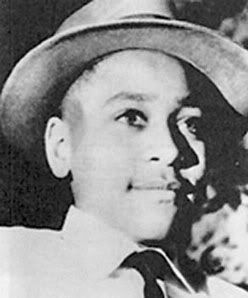
Emmett Till:
8/20/1955

http://www.jimcrowhistory.org/resources/lessonplans/hs_es_emmett_till.htm

Yusef Hawkins: 8/23/89
Killed in brooklyn!

http://en.wikipedia.org/wiki/Death_of_Yusef_Hawkins

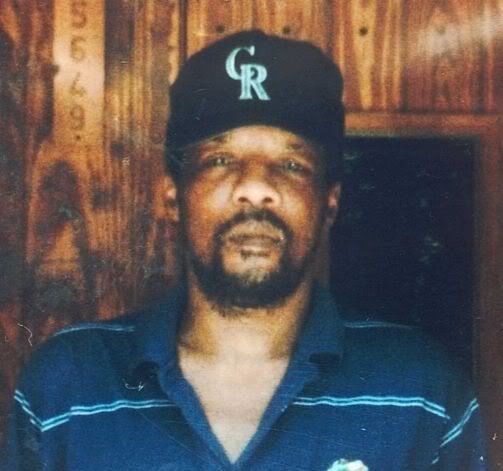
James Byrd: 6/7/98
dragged to death behind a pick-up truck in Texas!

http://en.wikipedia.org/wiki/Murder_of_James_Byrd,_Jr.

Amadou Diallo: 2/5/99
Killed by NYPD

http://www.soc.umn.edu/~samaha/cases/diallo_stories.html

Anthony Hill: 6/2010
shot & dragged behind a truck!

http://www.upi.com/Top_News/US/2010/06/05/Black-man-killed-dragged-behind-truck/UPI-32121275752824/

Sean Bell: 2/25/06
Killed leaving his bachelor's party!

http://topics.nytimes.com/top/reference/timestopics/people/b/sean_bell/index.html

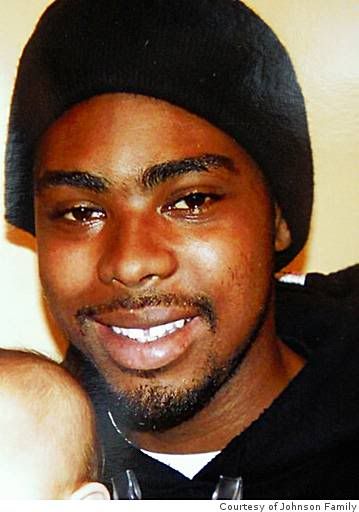
Oscar Grant: 1/1/2009
Killed New Years for being black....


DJ Henry: 10/17/2010
20yr old College student killed...cops get off!

http://www.boston.com/Boston/metrodesk/2012/03/passenger-henry-car-said-assumed-police-wanted-them-move-the-car/X4H589ZIgj2c1gFTZ6lWhP/index.html

Tobais Mackey: 10/2010
Killed for looking suspicious...

http://www.wfaa.com/news/local/Fifth-grader-recounts-shooting-by-Dallas-officer-106422248.html


junior manon


Tim Stansbury

Tim Stansbury

In 2004, Tim Stansbury, 19, was shot in a rooftop stairwell by a police officer who admitted he was startled and pulled the trigger accidentally. Stansbury had no gun and no criminal record. A grand jury found the shooting was accidental. “There appears to be no justification for the shooting,” Chief Ray Kelly said at the time.

 
Ousmane Zongo

Ousmane Zongo

In 2003, Ousmane Zongo, 24, was shot and killed by an undercover police officer dressed as a mailman during a raid for counterfeit goods. He was unarmed and had no criminal record. The officer was convicted of criminally negligent homicide but served no jail time.

 
Patrick Dorismond

Patrick Dorismond

In 2000, Patrick Dorismond, 26 and a security guard, was shot and killed by a NYPD plain clothes police officer after being approached by undercover officers who asked where they could buy marijuana. An argument ensued and Dorismond was shot and killed. No one was charged. A grand jury found the shooting was an accident.


wendell-allen-long-shot.jpg
Wendell Allen


Wendell Allen, 20, was not armed when a New Orleans police officer shot him during a raid on a suspected drug house in Gentilly.
 
Powered by Blogger